Back
Back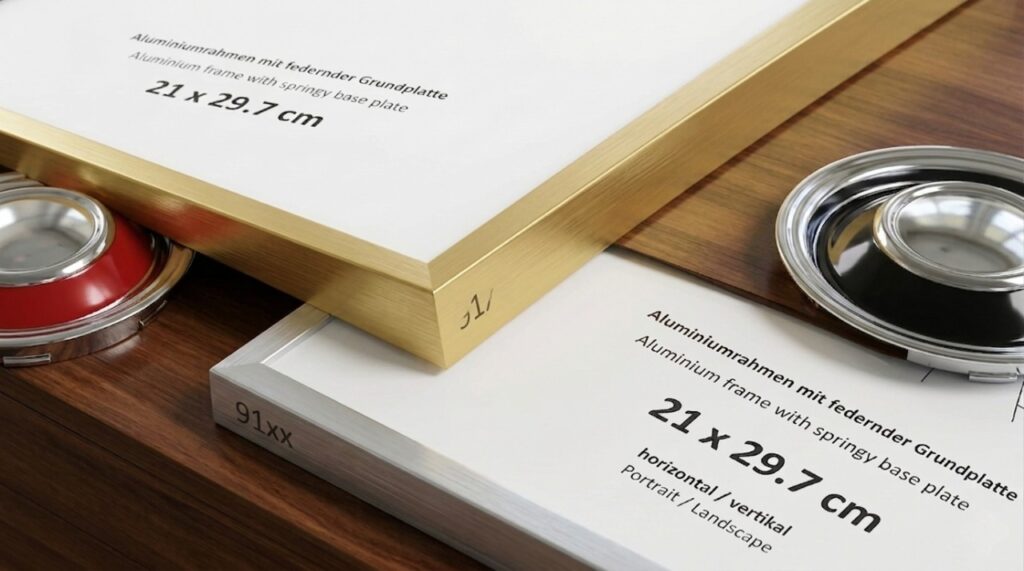
Amazon FBA can absolutely be a cash machine for frames—but only if you treat picture frames like a logistics product, not a décor product. Aluminium frames are a sweet spot: modern aesthetic, repeatable variants, and fewer “natural material” inconsistencies than wood. That makes them ideal for scaling a listing portfolio—when you source from the right supplier and engineer the offer around Amazon handling.
This guide breaks down exactly how to approach aluminium picture frames wholesale sourcing for Amazon FBA: what to buy, who to buy from, how to package to survive warehouses, and where the real margin levers live.
Why aluminium frames are an FBA-friendly category (if you pick the right build)
Aluminium frames win on Amazon because they’re:
- Consistent (same profile, same finish, same look across batches)
- Modern (minimalist aesthetics sell across home, office, and gifting)
- Variant-friendly (size + color + set count = a scalable catalog strategy)
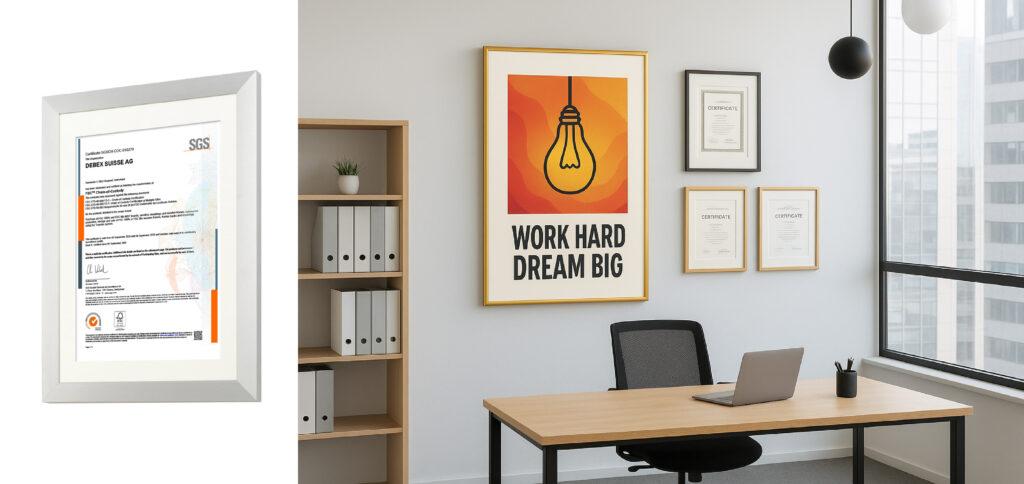
On the wholesale side, established producers like Debex Suisse AG position themselves as long-running wholesale manufacturers (producing since 1980, Swiss company, broad product range and custom options).
The catch: frames live or die by damage rate and returns. Your profitability isn’t just product cost—it’s survival through FBA.
Aluminium vs wood for Amazon: where aluminium wins
Wood can look premium, but it’s a headache at scale: grain variation, finish inconsistency, higher “this doesn’t match the photos” feedback risk. Aluminium is more predictable, and predictability is how you keep reviews stable across thousands of units.
If you’re building a portfolio (multiple sizes, colors, packs), aluminium gives you the operational consistency to scale without constantly firefighting quality drift.
The real risk: fragility, returns, and warehouse handling
Let’s be blunt: FBA warehouses are not gentle. If your packaging is “fine in our local courier,” it can still fail in Amazon’s system. That creates:
- more refunds
- more negative reviews
- more suppressed listings
Frames are profitable when you design for:
- warehouse handling,
- last-mile shipping,
- customer unboxing.
What “wholesale” should mean for Amazon sellers (and how to choose a supplier)
A wholesaler for Amazon isn’t just “someone who sells cheaper.” It’s a supply partner who can deliver:
- repeatable specs
- stable lead times
- scalable variations
- packaging options that reduce breakage
If you’re comparing photo frame wholesalers and picture framing wholesalers, judge them on Amazon outcomes—not catalog size.
Manufacturer vs middleman: why consistency beats “cheap”
Middlemen can look attractive on unit price, but they often can’t guarantee:
- consistent corner joins
- identical finish across lots
- stable component sourcing (glazing, backing, hangers)
Manufacturers that highlight in-house production and long-term operation generally signal better process control. Debex Suisse, for example, positions itself as a wholesale producer with decades of experience and custom production capability.
Quality checkpoints that reduce negative reviews
Before you commit to bulk aluminium photo frames, validate these checkpoints with samples:
- Corner integrity: no gaps, no sharp edges, no misaligned miters
- Profile rigidity: frames shouldn’t flex easily (especially larger sizes)
- Finish consistency: brushed/anodized surfaces should be uniform
- Backing + closures: secure, not flimsy (customers hate fiddly backs)
- Glazing choice: glass vs plastic impacts damage rate (more below)
If you’re sourcing gallery-style aluminium frames, the frame profile and stability become even more important. Debex’s “Classic Gallery Aluminium Picture Frame” emphasizes a wide profile and stable system positioning.
Product selection playbook: aluminium frame types that sell well on Amazon
Winning on Amazon is mostly about choosing frame types that:
- convert well in images
- survive FBA logistics
- allow bundling or variations
Below are the frame archetypes that tend to do well and why.
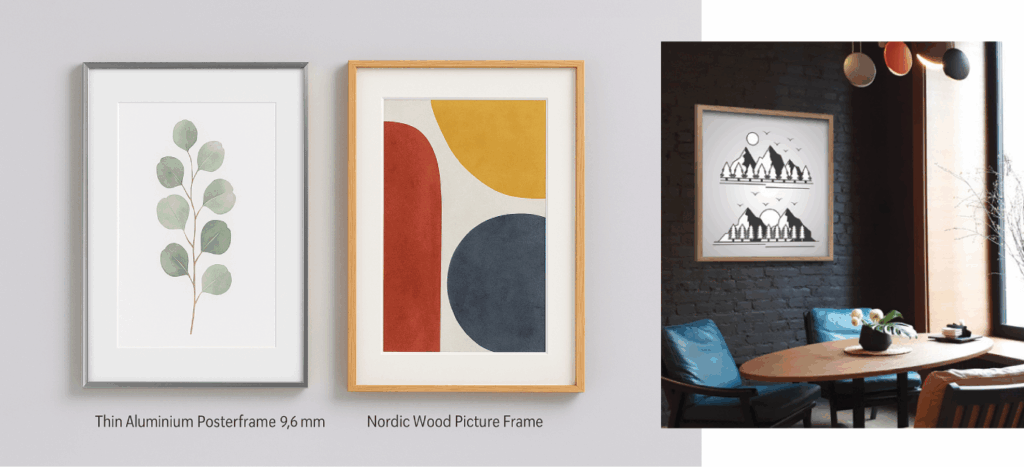
Thin aluminium poster frames
Thin profiles are your volume engine:
- price-competitive
- easy to standardize across sizes
- strong for multipacks and “gallery wall” sets
How to sell them:
Build variations by size and color, then test multipacks (2-pack/4-pack) to lift average order value.
Gallery-style aluminium frames (premium play)
Gallery profiles let you charge more because they look more “designed,” especially in:
- office décor
- art prints
- photography portfolios
You’re not just selling a frame—you’re selling presentation.
Debex explicitly positions its Classic Gallery frame as suitable for artworks and broader size ranges—good alignment for a premium FBA listing strategy.
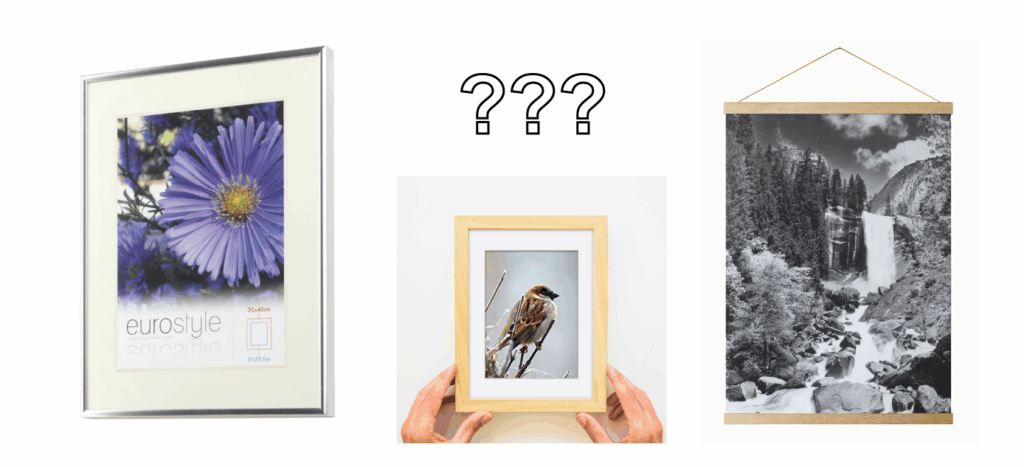
Front-loader frames (feature differentiation)
Front-loaders are underrated for Amazon because they give you a clear functional hook:
- “change prints without removing frame”
- better for rotating displays (home, retail, signage)
That feature can justify a higher price and reduce “annoying to use” reviews.
Debex’s “Aluminium Picture Frame – Front Loader” is described as front-insertion without removing the frame from the wall, and designed without glass. That “no glass” point can also reduce damage risk depending on use case.
Choose glazing strategically (glass vs clear plastic)
Glazing is one of your biggest margin/risk levers:
- Glass: premium feel, clearer optics, higher breakage risk
- Clear plastic (e.g., polystyrene): lower breakage risk, lighter, fewer shattered deliveries
Many wholesale producers offer both glazing and clear sheet options; Debex lists glass and clear polystyrene sheets as category components, which signals you can align glazing choice with your FBA damage strategy.
Rule of thumb:
If you’re scaling on FBA, reduce breakage first, then upgrade optics on best sellers.
FBA packaging & prep: how to stop damage claims before they happen
Amazon’s prep guidance is not “nice to have.” If your units aren’t packaged correctly, you risk:
- FC check-in delays
- chargebacks for prep
- avoidable damage
Amazon’s guidance for fragile items is straightforward: individually wrap or box units to prevent damage, and fragile units must be fully secured so the unit isn’t exposed.
Fragile prep basics Amazon expects
At a minimum, for fragile or breakable frame setups:
- Box with six solid sides or completely secured in bubble wrap so the unit is not exposed
- If using bubble wrap, Amazon has requirements for coverage so the item is not exposed
- Avoid movement inside the box (void fill matters)
Operator-grade advice:
Assume your master carton will be handled roughly and your unit box will be squeezed. If your packaging survives that, you’re in the safe zone.
Labeling and unit readiness (don’t get your shipment rejected)
If you poly-bag or shrink-wrap components (common for frame hardware kits or bundled sets), Amazon requires specific rules—like suffocation warnings for poly bags with larger openings.
Bundled sets tip:
If you sell a set (e.g., 4-pack frames), package it as a single unit and label it clearly as a set to prevent separation during fulfillment.
Margin levers: how bulk aluminium photo frames become actually profitable
Your profit isn’t only “buy low, sell high.” It’s:
- packaging cost
- dimensional weight
- return rate
- ad efficiency
- variation strategy
This is where experienced FBA sellers quietly win.
Bundles that lift AOV and reduce CAC
Frames are perfect for bundles because customers often buy in multiples anyway.
Bundle formats that typically convert:
- Multipacks (2/4/6)
- Gallery wall sets (mixed sizes, consistent style)
- “Starter kits” (frame + hanging hardware kit)
Why it matters: bundles reduce direct price comparison, lift AOV, and can improve ad efficiency.
Standardize sizes to scale ads + inventory cleanly
Most frame sellers sabotage themselves with too many SKUs. You don’t need 40 sizes to win. You need:
- the top demand sizes
- 1–2 finishes that match the majority of interiors (black + natural/brushed is a common pairing)
- consistent listing architecture
Then expand after you’ve validated:
- conversion rate
- damage/return rate
- review stability
Listing strategy: how to win Amazon search without gimmicks
Your listing should communicate three things instantly:
- what it is (size/material/profile)
- why it’s better (feature, finish, durability, ease-of-use)
- why it’s safe to buy (packaging, protection, quality)
Image stack that sells frames (and stays compliant)
Amazon image stacks that typically perform for frames:
- Main on white (frame only)
- Lifestyle on wall (clean room)
- Close-up: corner + profile thickness
- Feature callout (front-loader / easy open / hardware)
- Size diagram (inch/cm)
- Packaging protection image (“ships protected”)
Also: don’t oversell. If you claim “shatterproof,” your returns team will meet reality fast.
Range breadth + repeatable supply for scaling variants
A supplier that can support:
- standard profiles (fast replenishment)
- premium profiles (margin expansion)
- functional differentiators (front-loader, special systems)
- component ecosystem (glazing options, backing materials)
…lets you build a frame “platform,” not a one-off product.
That platform approach is how you go from “one listing” to a portfolio that prints revenue.
FAQ
What’s the best aluminium frame type to start with for Amazon FBA?
Start with a thin aluminium poster frame in top demand sizes and a neutral finish. It’s easier to standardize, easier to bundle, and usually less return-prone than complex systems.
Should I avoid glass for FBA shipments?
If you’re optimizing for scale, consider avoiding glass early on. Amazon’s fragile guidance requires strong protective packaging (six-sided box or fully secured bubble wrap). Glass increases damage risk and packaging cost.
Can I private label aluminium picture frames from a wholesaler?
Often yes—many producers support customization (finishes, sizes, branding, packaging). Prioritize suppliers that can deliver repeatable specs and stable lead times (your reviews depend on it). Debex explicitly promotes custom frame manufacturing options.
How do I choose between photo frame wholesalers and picture framing wholesalers?
Choose based on your operating model:
- If you want finished frames ready to sell: lean toward photo frame wholesalers
- If you want a broader component ecosystem (glazing/backing/hardware): picture framing wholesalers can be stronger
Either way, sample, stress-test packaging, and confirm repeatability.
Can I sell wholesale framed pictures on Amazon (and what about licensing)?
You can sell framed art, but licensing matters. If the art isn’t yours, you need the rights to sell it—otherwise you risk IP complaints. Many sellers choose to sell frames only or use licensed/public-domain artwork with proper documentation.